
If you own a commercial property in Elmhurst — whether it’s a retail storefront, an office building, an apartment complex, or a warehouse — there’s a good chance your roof is flat or low-slope. And flat roofs, while practical and cost-effective, come with their own set of maintenance needs that are very different from sloped residential roofing.
With over 30 years in the construction industry, we’ve maintained, repaired, and replaced hundreds of flat roofs across the Chicagoland area. Here’s what Elmhurst commercial property owners need to know to protect their investment.
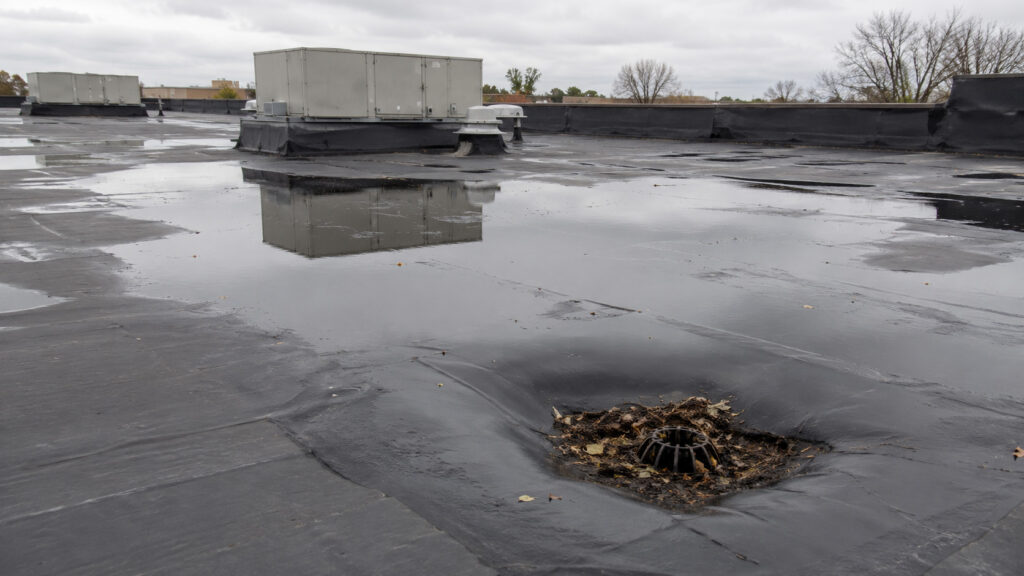
The Most Common Flat Roof Problems in Illinois
Illinois weather is tough on flat roofs. From the intense summer sun to the freeze-thaw cycles of winter, here are the issues we see most often:
Ponding Water
Flat roofs aren’t perfectly flat — they have a slight slope to direct water toward drains. But when drainage is inadequate, water pools on the roof surface and stays there for 48 hours or more.
Why it matters: Standing water adds weight to the roof structure, accelerates membrane deterioration, and increases the risk of leaks. Over time, ponding water can lead to roof failure.
What to look for: Dark patches on the roof membrane, algae or moss growth, and water that doesn’t drain within two days after a rain.
Seam Separation
Most flat roof membranes are installed in large sheets, with seams where the sheets overlap. These seams are sealed during installation, but they can separate over time due to:
- Temperature fluctuations that cause expansion and contraction
- UV exposure that breaks down sealants
- Foot traffic from HVAC maintenance or roof access
- Age-related adhesive failure
Why it matters: Open seams are the most common entry point for water on flat roofs.
Membrane Blistering
Blisters form when moisture or air gets trapped between layers of the roof membrane. They look like bubbles on the surface and can range from small dimples to large raised areas.
Why it matters: Blisters weaken the membrane and can rupture, creating openings for water to enter the roofing system.
Flashing Failures
Flashing is used wherever the roof meets a vertical surface — walls, curbs, HVAC units, skylights, or parapets. These are the most vulnerable points on any flat roof.
Why it matters: A small flashing failure can allow significant water intrusion because the water runs down the wall and behind the membrane.
Clogged Drains and Scuppers
Flat roofs rely on interior drains, scuppers (wall openings), or gutters to remove water. When leaves, debris, or gravel block these drainage points, water has nowhere to go.
Why it matters: A clogged drain on a flat roof can lead to ponding, structural overloading, and interior leaks within hours of a heavy rain.
TPO vs. EPDM vs. PVC: Which Flat Roof System Fits Your Property?
If you’re replacing a flat roof or installing one on a new building, you’ll need to choose the right membrane material. Here are the three most common options:
TPO (Thermoplastic Polyolefin)
TPO is one of the most popular flat roof membranes in commercial roofing today. It’s a single-ply membrane that’s heat-welded at the seams for a watertight bond.
Pros:
- Highly reflective — reduces cooling costs in summer
- Heat-welded seams are stronger than adhesive-bonded seams
- Resistant to UV rays, chemical exposure, and punctures
- Lower cost than PVC
- Energy-efficient (meets ENERGY STAR and cool roof standards)
Cons:
- Quality varies significantly between manufacturers
- Some early TPO products experienced seam failures (modern formulations have improved)
- Not as chemical-resistant as PVC
Best for: Office buildings, warehouses, retail centers, and apartments where energy efficiency is a priority.
EPDM (Ethylene Propylene Diene Monomer Rubber)
EPDM is a synthetic rubber membrane that’s been used on flat roofs for decades. It’s known for its durability and flexibility.
Pros:
- Excellent flexibility — handles extreme temperature swings without cracking
- Very durable with a long service life (20–30+ years with proper maintenance)
- Resistant to UV radiation and ozone
- Simple, proven installation methods
- Repairs are straightforward
Cons:
- Dark surface absorbs heat (though white-coated EPDM is available)
- Seams are adhesive-bonded, which can be less reliable than heat welding
- Not as puncture-resistant as TPO or PVC
Best for: Properties where long-term durability and proven performance matter more than energy efficiency.
PVC (Polyvinyl Chloride)
PVC has been used in commercial roofing for over 40 years. Like TPO, it’s heat-welded at the seams.
Pros:
- Excellent chemical and grease resistance — ideal for restaurants or buildings near industrial areas
- Heat-welded seams are very strong
- Highly durable with a long service life
- Fire-resistant
Cons:
- Higher material cost than TPO
- Can become brittle over time with prolonged UV exposure (though modern formulations include plasticizers to address this)
- Environmental concerns with PVC manufacturing and disposal
Best for: Restaurants, food service buildings, and properties where chemical resistance is important.
Summer Heat & UV Damage: What to Watch For
August sunlight is intense, and flat roofs bear the brunt of it. Over time, UV exposure can:
- Degrade the roof membrane — Causing it to become brittle, crack, or lose flexibility
- Dry out sealants and flashings — Leading to gaps at seams and penetrations
- Fade reflective coatings — Reducing energy efficiency
- Accelerate aging — Especially on dark-colored membranes
What to do about it: A reflective roof coating can extend the life of your existing roof membrane, reduce cooling costs, and protect against UV damage. For roofs that are nearing the end of their service life, replacement with a white TPO or coated EPDM membrane is a smart long-term solution.
Preventative Maintenance That Extends Roof Life
The single most cost-effective thing you can do for your flat roof is schedule regular inspections and maintenance. Here’s what a good maintenance plan looks like:
Spring (April–May)
- Inspect for winter damage (cracks, blistering, seam separation)
- Clear debris from drains, scuppers, and gutters
- Check flashings around all roof penetrations
- Apply sealant to any cracks or gaps
Summer (July–August)
- Check for ponding water after a heavy rain
- Inspect membrane condition — look for UV damage, blistering, or wear
- Trim overhanging branches that could drop leaves on the roof
- Verify HVAC units and curbs are properly sealed
Fall (October–November)
- Clean all drains and gutters thoroughly before winter
- Remove fallen leaves and debris from the roof surface
- Inspect flashings and sealants before freeze-thaw cycles begin
- Check for any damage from summer storms
Winter (December–March)
- Remove snow accumulation after heavy storms (excessive weight can stress the structure)
- Watch for ice dams at roof edges and around drains
- Inspect for interior leaks after rain or melting events
- Avoid walking on the roof in freezing conditions — membranes become brittle in cold weather
A simple twice-yearly inspection program can extend the life of your flat roof by 5–10 years and dramatically reduce the risk of unexpected leaks.
Why Elmhurst Businesses Choose ELITE EXTERIORS
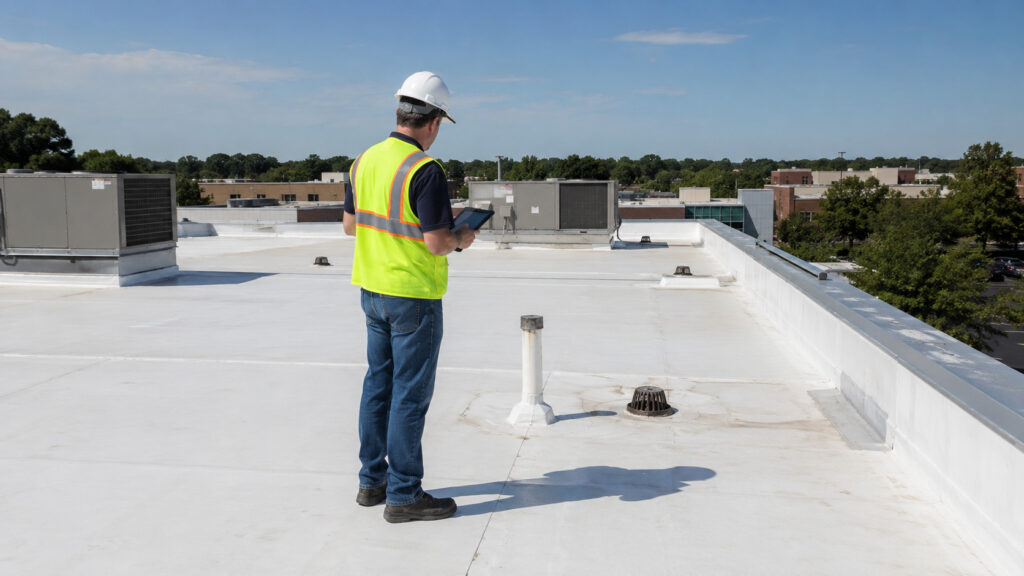
Commercial roofing is different from residential. The stakes are higher, the schedules are tighter, and the roof systems require specialized knowledge. We bring:
- 30+ years of experience with commercial flat roof systems
- In-house insurance claims support — We can help with storm damage claims for your commercial property
- Licensed, bonded, and insured for commercial projects of all sizes
- Local expertise — We understand Elmhurst building codes, permit requirements, and the specific weather challenges of Chicagoland
- Honest recommendations — Whether your roof needs a repair, a coating, or a full replacement, we’ll tell you what’s actually needed
Schedule a Commercial Roof Inspection
Your commercial property is an investment worth protecting. A professional flat roof inspection can identify small issues before they become costly problems — and give you a clear picture of your roof’s remaining service life.
We serve Elmhurst, Oak Brook, Addison, Lombard, Downers Grove, Wheaton, Glen Ellyn, Park Ridge, Oak Park, and the greater Chicagoland area.
→ Contact us today to schedule your commercial flat roof inspection.